
Turning sustainability ambitions into measurable climate action
At EarthWatch, we help organizations understand their environmental impact, identify opportunities for emissions reduction, and develop practical pathways toward net zero. Our work combines robust carbon accounting with strategic decarbonization planning to turn complex sustainability challenges into clear, actionable solutions.
SOS Children’s Villages Jordan
Carbon Footprint Assessment & Sustainability Roadmap
EarthWatch worked with SOS Children’s Villages Jordan to establish its 2023 carbon footprint baseline, identify key emissions hotspots, and develop a practical pathway for reducing emissions across its operations.
View the ProjectThe numbers behind the baseline
644.86
tCO₂e
baseline
80.77%
Scope 3 emissions
328 kW
Existing solar PV
22%
Reduction target by 2026
Understanding where emissions come from — and where action matters most
SOS Children’s Villages Jordan operates family homes, schools and activity centers across Amman, Irbid and Aqaba, supporting children and young people through a holistic care model. For SOS Jordan, environmental stewardship is closely connected to its wider social mission and its ambition to align its operations with Jordan’s climate goals.
EarthWatch was engaged to establish a robust carbon footprint baseline and translate the findings into a practical sustainability and emissions-reduction plan.
Establishing the baseline
For 2023, SOS Children’s Villages Jordan’s total organizational footprint was 644.86 tCO₂e.
644.86
tCO₂e total
Scope 1
57.59 tCO₂e
8.93%
Onsite LPG consumption and the organization’s vehicle fleet.
Scope 2
66.42 tCO₂e
10.30%
Purchased electricity for facilities.
Scope 3
520.85 tCO₂e
80.77%
Business travel, employee commuting and waste.
The biggest opportunity wasn’t electricity. It was the value chain.
80.77%
of SOS Jordan’s footprint sits within Scope 3.
Where Scope 3 emissions concentrate
Business Travel
Flight emissions are the largest component of the business-travel category, followed by ground transportation.
Employee Commuting
91.93% of commuting distance is undertaken using private vehicles.
Waste & Water
Emissions are associated with water supply, wastewater treatment and landfill waste.
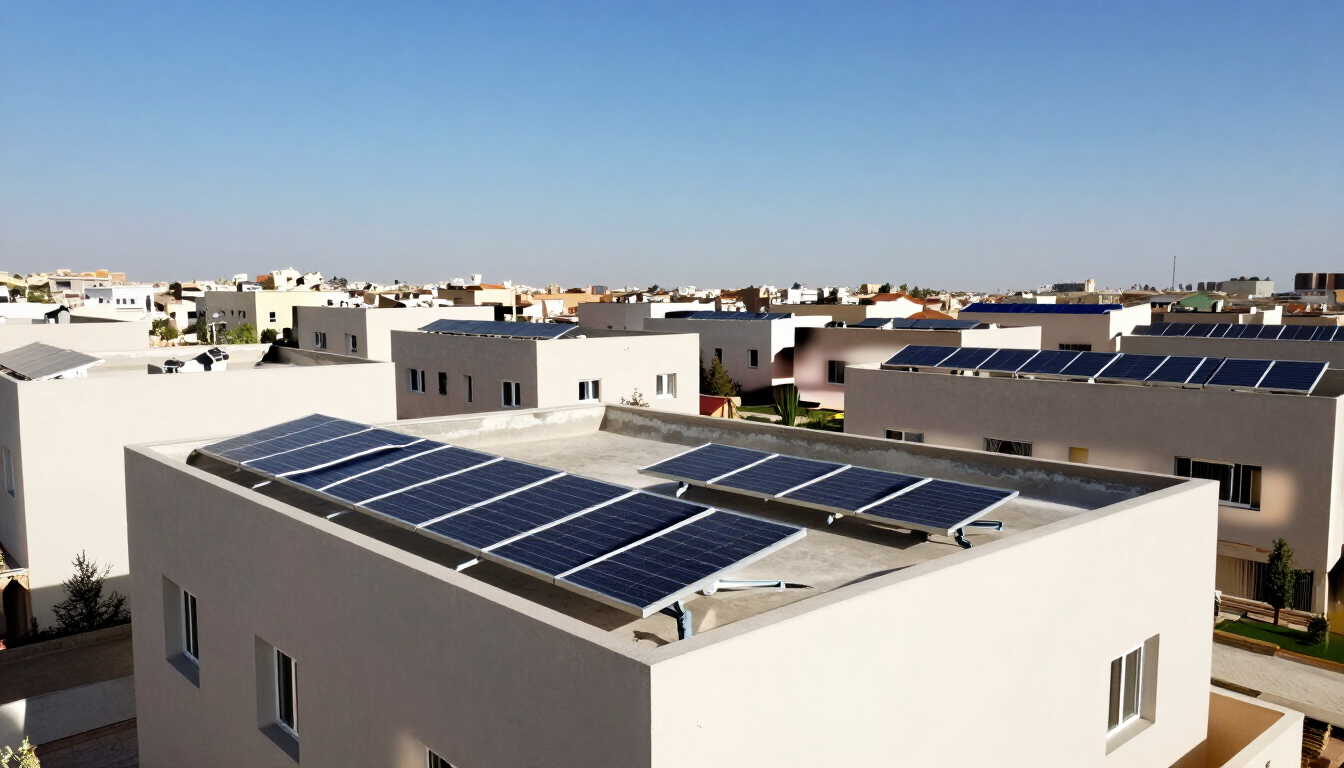
SOS Jordan had already started its transition
EarthWatch wasn’t starting from zero — we identified how existing progress could be built upon and expanded.
328 kW
of photovoltaic capacity installed across the three villages
~50%
of total village electricity consumption offset by existing PV
Turning emissions data into action
01 — Measure
2023 carbon footprint baseline
02 — Identify
Emissions hotspots and reduction opportunities
03 — Prioritize
Operational and strategic interventions
04 — Implement
2024–2026 sustainability initiatives
05 — Monitor
KPIs and annual emissions performance
A 22% reduction pathway
SOS Jordan established a target to reduce total emissions by 22% between 2024 and 2026, building on an 11.9% reduction already achieved between 2022 and 2023.
Scope 1
20% reduction target
- •Fleet electrification
- •Eco-driving
- •Fuel transition
- •Improved equipment maintenance
Scope 2
20% reduction target
- •LED upgrades
- •Energy Management Systems
- •Additional solar PV
- •Green electricity tariffs
Scope 3
10% reduction target
- •Virtual-first travel policy
- •Carpooling incentives
- •EV charging
- •Digital transformation
From accelerate to regenerate
2024
Accelerate
- Solar expansion
- Sustainable agriculture
- Digital integration
- Rainwater harvesting
2025
Circularity
- Recycling
- Water repurposing
2026
Regenerate
- Resource-efficient agriculture
- Organic farming
What gets measured gets managed
5%
annual short-term emissions reduction
+50 kW/year
renewable capacity addition
20%
EV / hybrid fleet share
30%
short-term waste diversion
Longer-term ambitions
These KPIs are specified in the report’s monitoring framework.
What we delivered
Carbon Footprint Baseline
Established the organization's 2023 GHG emissions baseline.
Emissions Hotspot Analysis
Identified the activities and sources contributing most significantly to the footprint.
Decarbonization Strategy
Developed targeted reduction measures across Scopes 1, 2 and 3.
Sustainability Roadmap
Translated the findings into a structured 2024–2026 implementation pathway.
Monitoring Framework
Established KPIs to track progress and maintain accountability.
A practical pathway to net zero
Built on data, grounded in engineering.
Your sustainability journey starts with knowing where you stand
Measure your footprint. Identify your opportunities. Build your pathway to net zero.
Connect with Our Team